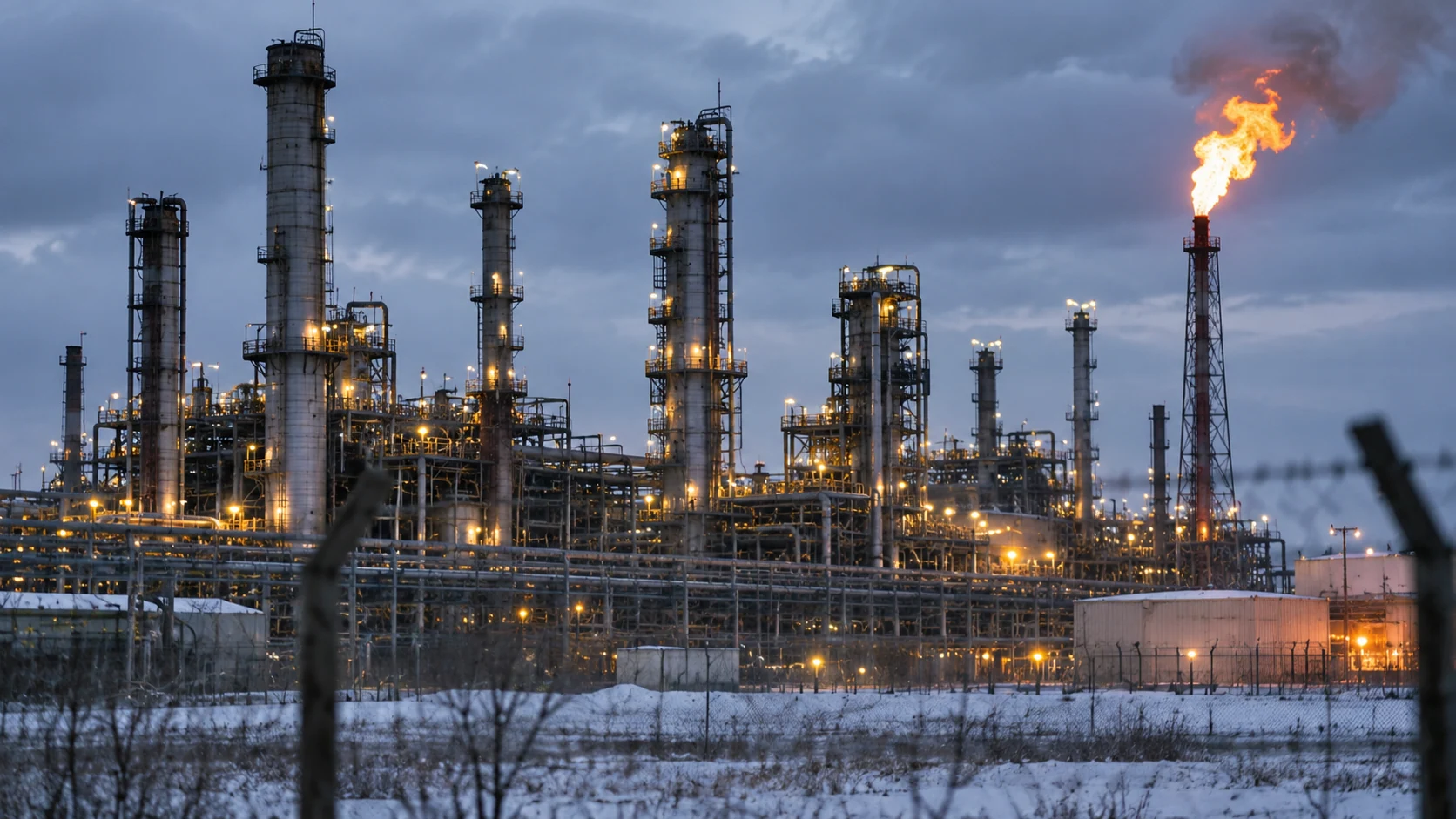
November 7, 2026 — Renewed attacks on Russian oil-refining facilities have raised concerns about the country’s fuel production and diesel supplies, as Ukraine continues to target energy infrastructure during its war with Russia.
Ukrainian President Volodymyr Zelenskyy said on November 6 that Kyiv would continue its long-range strikes in response to Russian attacks on Ukraine’s electricity and other civilian infrastructure.
His comments followed reports of fresh attacks on Russian industrial and oil-processing facilities, adding to pressure on a refining sector that has already experienced repeated disruptions this year.
Russian Refineries Face Renewed Attacks
Russian authorities reported incidents affecting industrial facilities in several regions during the past week, including areas associated with major oil refineries.
Reports of an overnight drone attack in Ryazan, southeast of Moscow, followed an earlier reported strike near Yaroslavl.
The extent of the damage and its effect on refinery operations could not be independently established from the official statements available.
Ukraine has increasingly targeted oil-processing and fuel-related facilities as part of its campaign against infrastructure that supports Russia’s economy and military operations.
Ukraine Links Strikes to Russian Energy Attacks
In an address on November 6, Zelenskyy said Ukrainian officials had received intelligence indicating that Russia was preparing further attacks on energy facilities, bridges and civilian infrastructure.
He said Ukraine was strengthening its air defences and coordinating with international partners to protect essential services ahead of winter.
The Ukrainian president also confirmed discussions with the team responsible for the country’s long-range strikes, indicating that Kyiv intended to maintain pressure on Russian targets.
Ukraine has previously said it would stop attacking Russian energy facilities if Moscow ended its strikes on Ukrainian energy infrastructure.
Diesel Supply and Export Concerns
Repeated refinery disruptions have complicated Russia’s efforts to maintain domestic fuel supplies while continuing exports to international markets.
Earlier restrictions on fuel exports were introduced amid shortages, although some limits on diesel shipments have subsequently been eased.
The latest attacks have renewed questions about the availability of refined products and Russia’s ability to meet both domestic demand and export commitments.
Diesel shipments associated with a recent US–Russia trade arrangement have also attracted attention, with shipping activity being monitored amid uncertainty over regulatory and sanctions requirements.
However, reported vessel movements do not establish that the shipments have been delivered or that the arrangements will proceed without obstacles.
Energy Infrastructure Remains a Focus of the Conflict
The renewed strikes come as both Russia and Ukraine face mounting challenges in protecting energy infrastructure.
For Ukraine, attacks on electricity networks and heating facilities pose particular risks as winter approaches. For Russia, damage to refining facilities threatens fuel production and distribution.
The continuing exchanges underline the importance of energy infrastructure in the conflict, with the effects extending beyond the immediate targets to domestic fuel supplies and international trade.