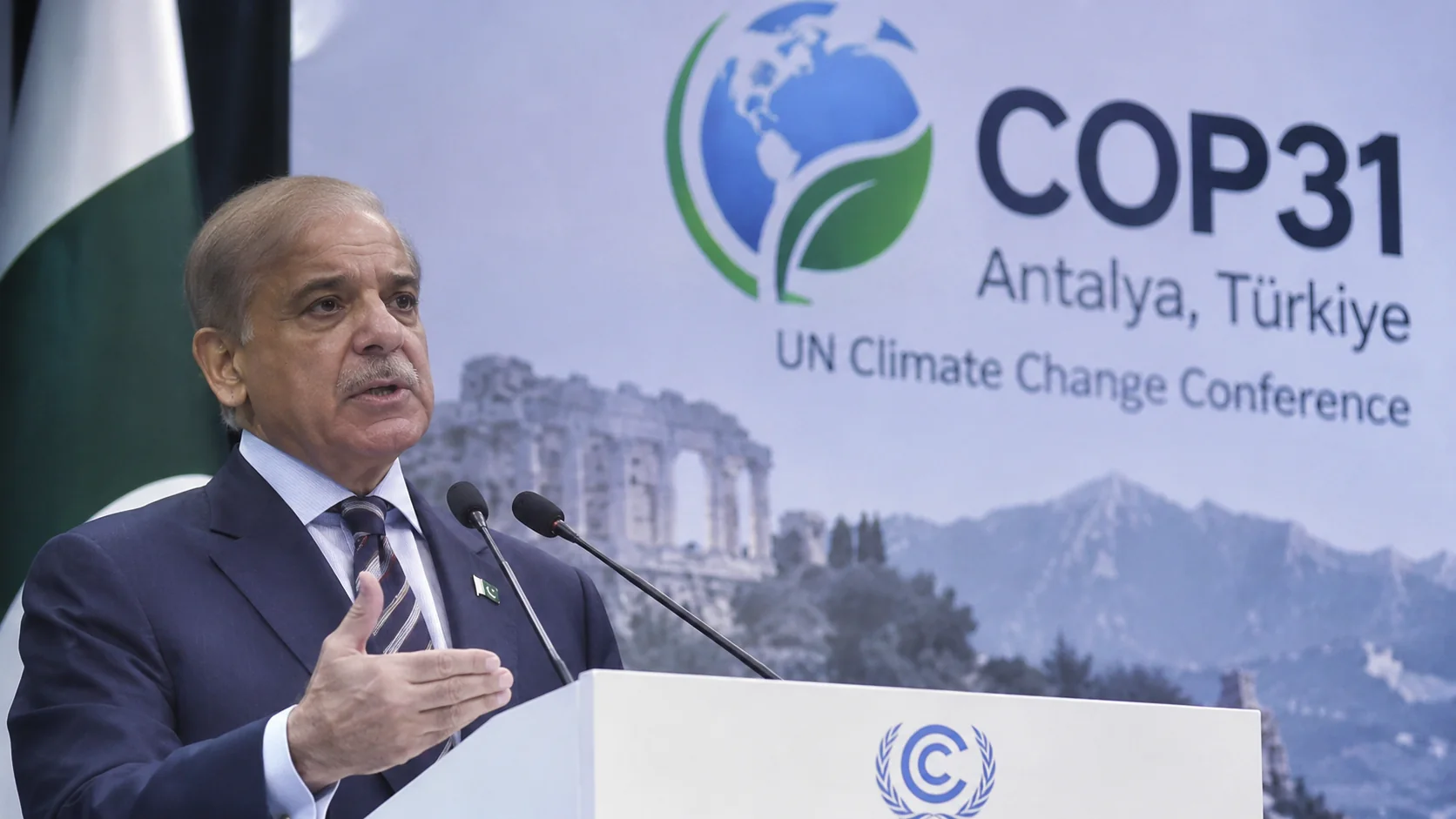
ANTALYA: Prime Minister Shehbaz Sharif has said Pakistan added nearly 22 gigawatts of rooftop solar capacity over the past two years, highlighting the growing adoption of solar power by households and businesses seeking more affordable electricity.
Speaking at the COP31 climate summit in Türkiye on Wednesday, the prime minister described the expansion as a major shift towards cleaner energy driven largely by consumers.
He made the remarks during a high-level discussion titled 35 by 35: Powering the Future, focused on increasing the role of electricity in global energy consumption.
Pakistan supports the 35-by-35 Global Electrification Pledge, which aims to raise electricity’s share of total final energy consumption to approximately 35% by 2035.
Shehbaz said clean energy sources now account for nearly 55% of Pakistan’s energy mix, while the government is also pursuing nuclear power and electric transport.
He referred to progress on the Chashma-5 nuclear power project, which is expected to add 1,200 megawatts of electricity generation capacity once completed.
The prime minister also outlined plans to encourage electric vehicle adoption through the proposed automotive policy, including incentives intended to increase the share of electric vehicles in new sales.
Despite the expansion of renewable energy, Shehbaz warned that Pakistan would need substantial investment to maintain the transition.
He estimated that the country requires approximately $138 billion by 2035 for low-carbon power generation and a further $50 billion to replace coal-based electricity with solar energy.
He called for concessional financing, affordable technology and stronger international cooperation to help developing countries expand electricity networks and energy storage without increasing their debt burdens.
The prime minister said the success of global electrification commitments would depend on whether financial support could match the pace of countries’ clean energy ambitions.
Türkiye is hosting COP31 in Antalya, where international leaders and climate negotiators are discussing measures to reduce emissions and accelerate the transition away from fossil fuels.