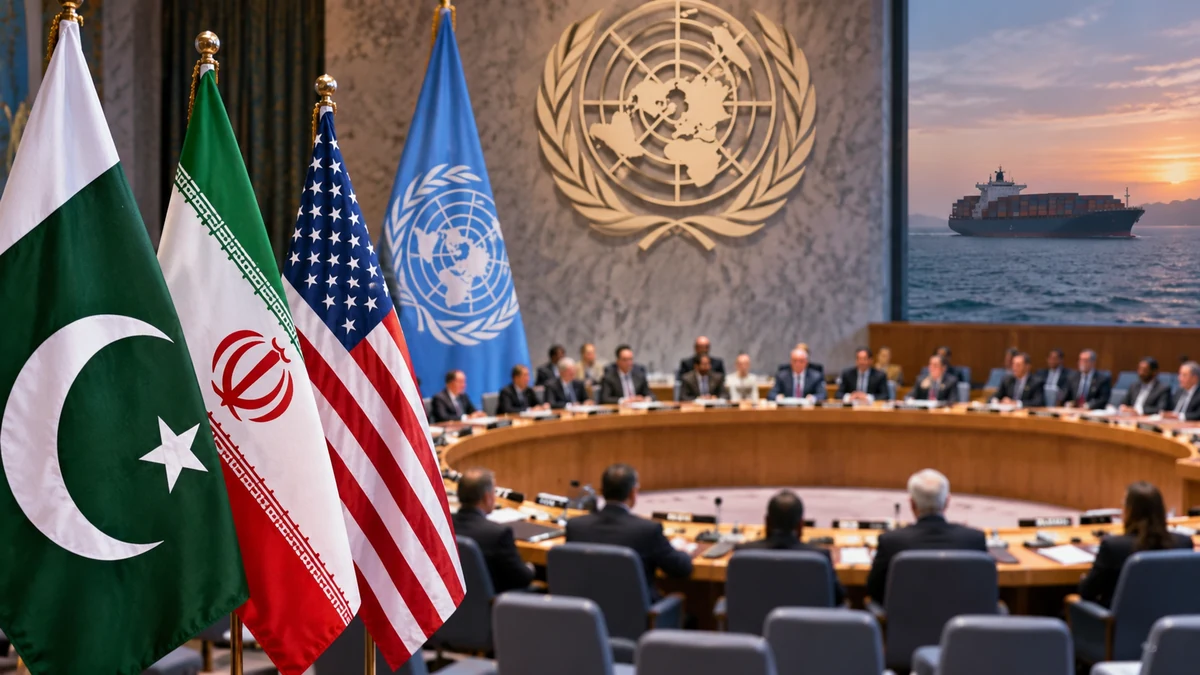
ISLAMABAD, 15 November 2026 — Pakistan has urged the United Nations Security Council to help restore safe navigation through the Gulf’s major shipping routes, warning that continued military tensions could threaten international trade and increase economic pressure on developing countries.
The appeal came during a Security Council briefing held on Friday, 13 November, at Bahrain’s request to examine escalating threats to maritime security in the Gulf.
Pakistan’s Permanent Representative to the UN, Ambassador Syed Haider Shah, highlighted the importance of the Strait of Hormuz and Bab el-Mandab, two waterways used by international energy and cargo shipments. He said disruptions could affect fuel supplies, food security and the movement of humanitarian assistance.
The Pakistani envoy called for the protection of merchant vessels and their crews, respect for national sovereignty and an end to attacks on civilian infrastructure.
He also condemned attacks and threats by Houthi forces against Saudi Arabia, reaffirming Pakistan’s support for the kingdom’s security and territorial integrity.
The meeting took place amid continuing disagreements between Washington and Tehran over responsibility for regional instability.
Iranian representative Gholamhossein Darzi accused the United States and Israel of contributing to the crisis through military operations against Iran. He maintained that Tehran remained willing to pursue diplomacy but wanted assurances against further attacks.
US representative Jennifer Locetta disputed Iran’s account, accusing Tehran of threatening neighbouring countries and commercial shipping through missile and drone attacks and support for armed groups.
Gulf Cooperation Council representatives also raised concerns about attacks affecting their member states. Bahrain’s ambassador welcomed mediation efforts involving Pakistan, Oman and Qatar.
Pakistan urged the parties to maintain diplomatic communication and support regional initiatives alongside the UN secretary-general’s efforts.
Islamabad’s position places particular emphasis on preventing further disruption to maritime trade while encouraging negotiations aimed at reducing tensions between the countries involved.