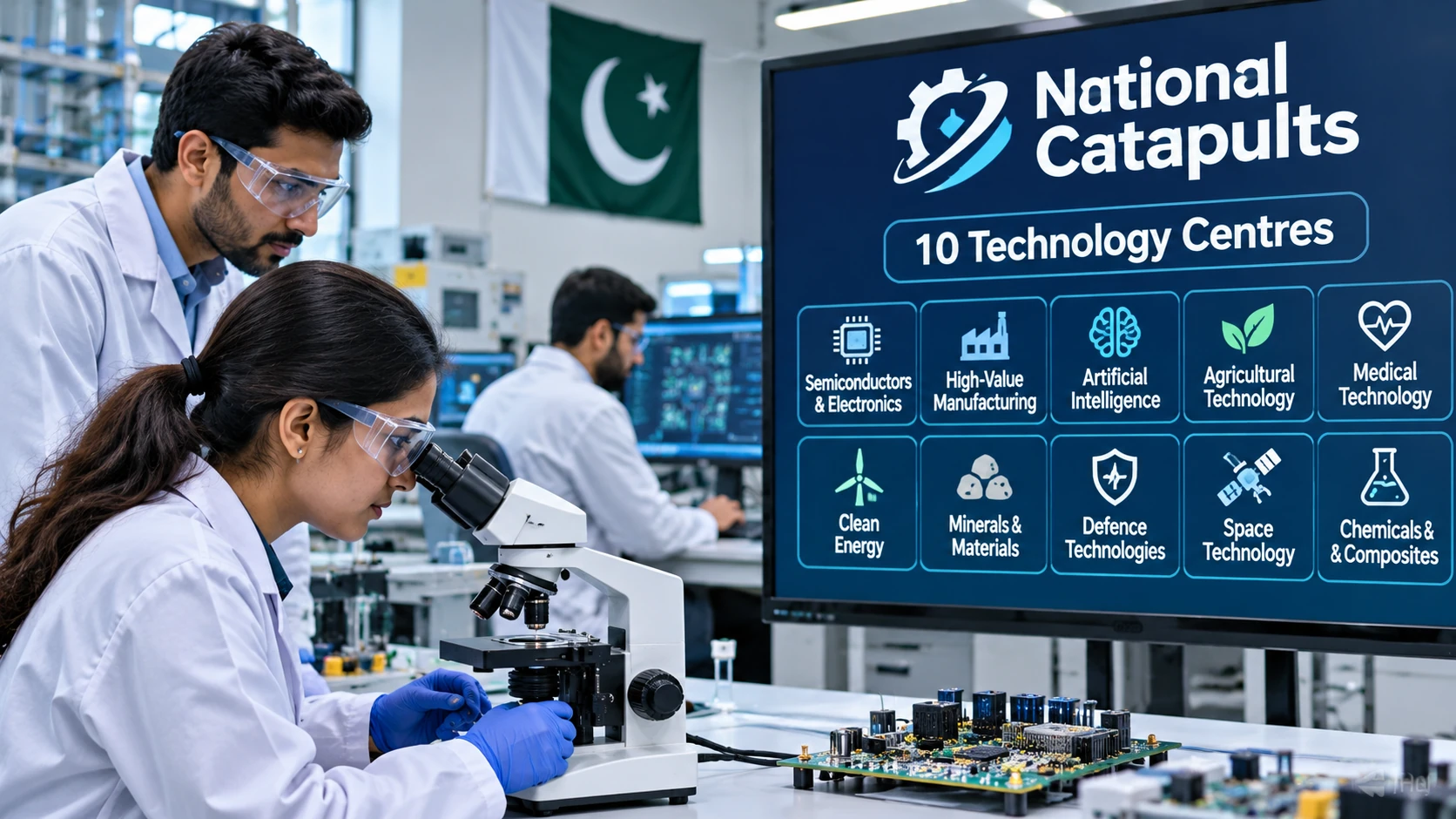
ISLAMABAD: The Planning Commission has announced plans to establish 10 National Catapults across Pakistan to help universities and industries convert scientific research into commercially viable technologies and products.
Planning Minister Ahsan Iqbal announced the initiative on Friday following a visit to IRADA, a state-owned enterprise that will lead the first centre, focusing on semiconductors and advanced electronics.
The network will operate under the Science, Technology and Engineering for Development (STED) programme, part of the government’s Uraan Pakistan initiative.
The proposed centres will provide shared testing facilities, prototype development equipment and pilot production lines to researchers, start-ups and manufacturers.
According to the Planning Commission, the initiative is intended to address difficulties faced by Pakistani researchers in moving innovations beyond university laboratories into industrial production.
The 10 centres will cover semiconductors and advanced electronics, high-value manufacturing, artificial intelligence, agricultural technology, medical technology, clean energy, minerals and materials, defence-related technologies, space technology, and chemicals and composites.
Their work will focus on technology readiness levels four to seven, covering the stages between laboratory validation and the demonstration of prototypes in operational environments.
Iqbal said the facilities would allow universities and businesses to test technologies together, assess manufacturing requirements and reduce the risks associated with commercial production.
The government expects the network to support higher-value exports, encourage domestic alternatives to imported technologies and create employment opportunities for engineers, scientists and technicians.
It also aims to attract foreign investment and help businesses meet international technical standards and certification requirements.
The programme draws on international research-commercialisation models, including the United Kingdom’s Catapult Network, Germany’s Fraunhofer Institutes, Manufacturing USA and Singapore’s A*STAR.
The Planning Commission said the initiative’s success would be assessed through the number of technologies reaching commercial production, firms entering new markets and skilled jobs created.