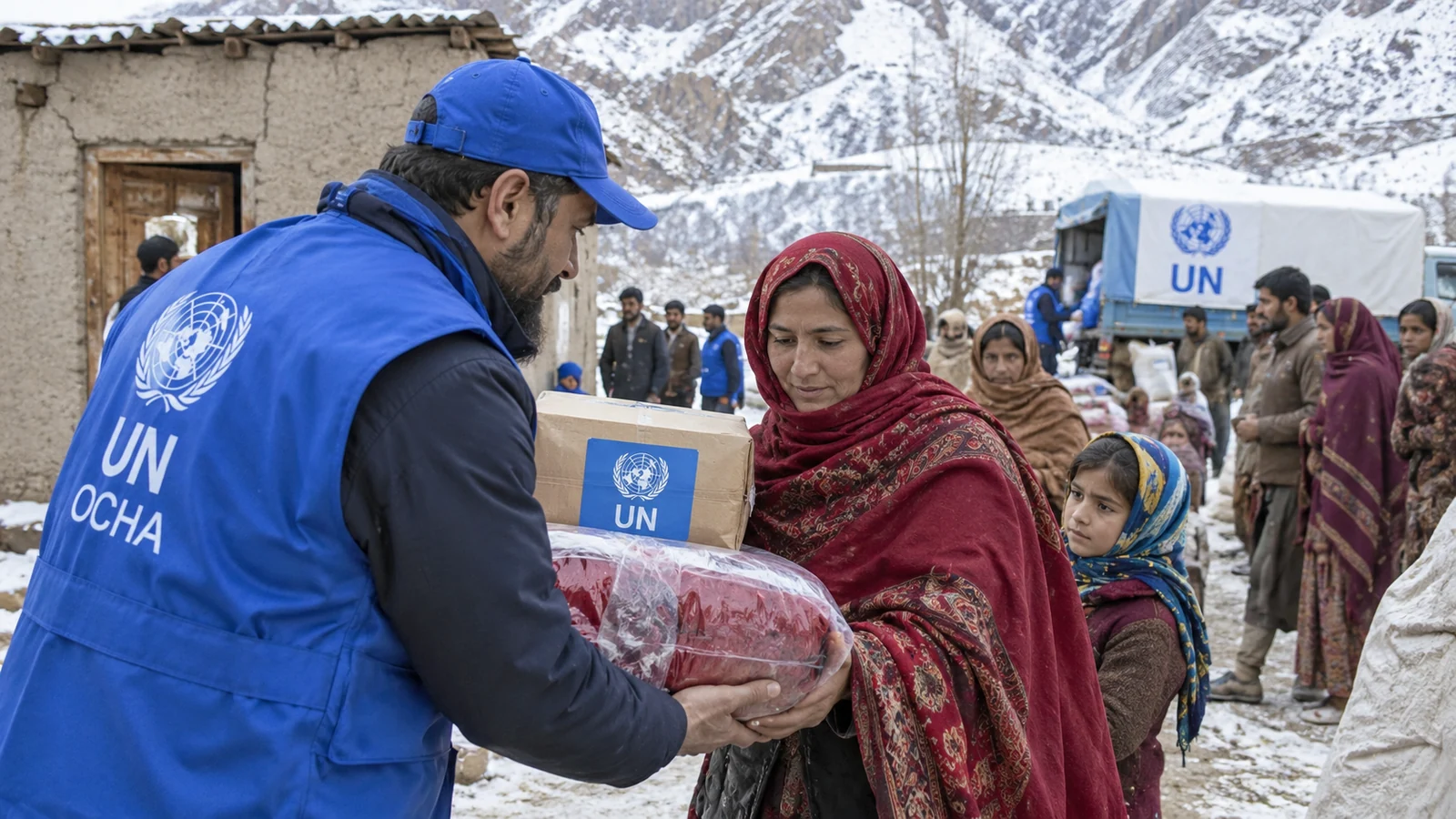
ISLAMABAD: United Nations agencies have outlined a winter relief strategy targeting more than 826,000 vulnerable people across 53 priority districts in Pakistan, warning that a funding shortfall could limit assistance during the colder months.
The Inter-Agency Winterisation Strategy 2026–27, prepared by the UN Office for the Coordination of Humanitarian Affairs (OCHA) and the International Organization for Migration (IOM), covers the October-to-March winter response period.
The strategy estimates that 4.13 million people face varying levels of winter-related vulnerability, with humanitarian partners aiming to assist 826,106 individuals from approximately 118,015 families.
The planned response includes blankets, warm clothing, quilts, bedding and other winter essentials. Cash assistance, shelter improvements, insulation and heating support may also be provided where appropriate.
According to the strategy, humanitarian partners have approximately $540,100 available, alongside $90,000 in pooled funding, against a reported shortfall exceeding $3.54 million.
Sindh’s contingency relief needs alone account for approximately $1.62 million of the funding shortfall.
Priority areas include nine districts in Gilgit-Baltistan, four in Azad Jammu and Kashmir and 16 in Khyber Pakhtunkhwa, alongside vulnerable communities in Punjab, Sindh and Balochistan.
The strategy identifies mountainous regions as particularly exposed to heavy snowfall, freezing temperatures and road closures, while families living in inadequate shelters after previous floods face additional risks in lower-altitude areas.
Seven districts in Khyber Pakhtunkhwa, including Swat, Upper Dir, Shangla and Upper Chitral, have been classified as very high risk.
UNICEF is separately planning to distribute 14,000 children’s winter clothing kits, 24,600 blankets and 1,920 quilts during November and December.
The relief effort will prioritise displaced families, children, older people, women-headed households and people with disabilities, with assistance coordinated through provincial disaster authorities and humanitarian organisations.
The strategy draws on the National Disaster Management Authority’s seasonal early-warning assessments and is intended to address immediate humanitarian needs rather than longer-term infrastructure requirements.