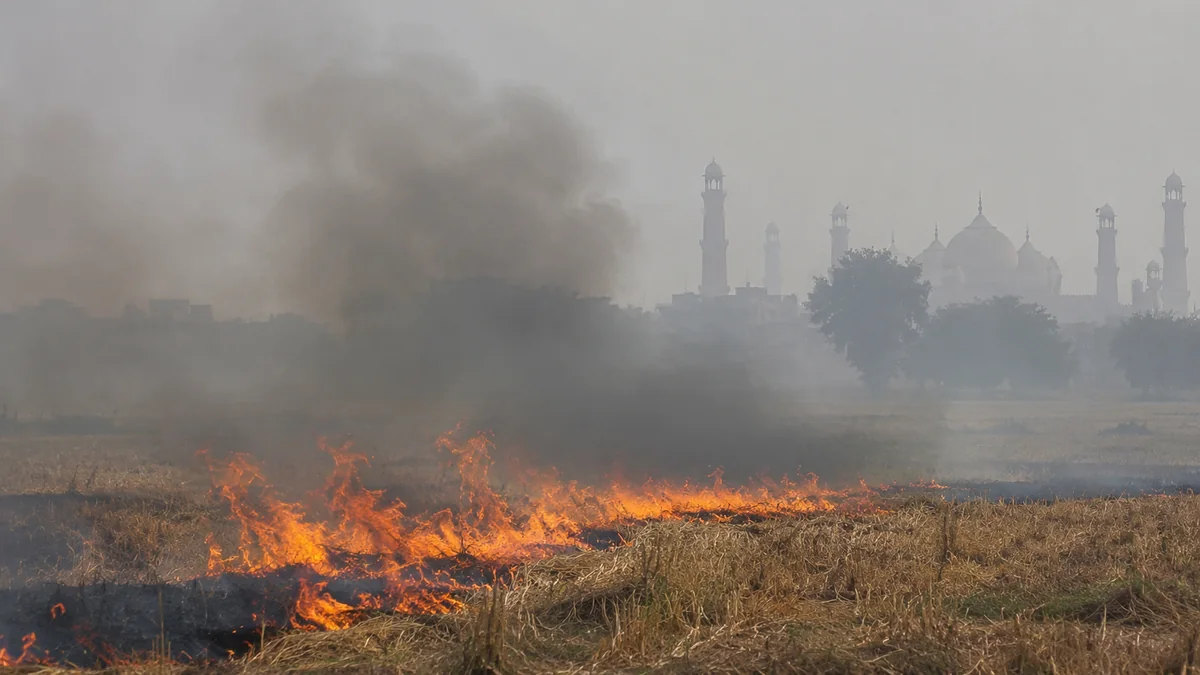
LAHORE, 15 November 2026 — Punjab authorities have deployed specialised rapid-response teams to tackle illegal crop-residue burning as Lahore continues to face severe air pollution during the winter smog season.
The provincial Environment Protection and Climate Change Department has established a force of 750 personnel operating through 67 units across major rice-growing districts.
According to department head Silwat Saeed, the teams aim to reach reported agricultural fires within 10 to 15 minutes. Officers also patrol farming areas and respond to complaints about burning crop residue.
In one operation observed by Reuters on the outskirts of Lahore, a team extinguished a fire in a harvested rice field within minutes.
Provincial officials reported receiving 679 complaints about field fires during a 24-hour period last week and said crews extinguished 650 of them.
Farmers found burning crop residue can face fines of Rs15,000 per acre. Those who fail to pay may also face prosecution and imprisonment.
The government is combining enforcement with financial assistance for alternative farming methods. More than 10,000 subsidised super seeders have been distributed, with the province covering 60 per cent of their cost.
The machines help farmers prepare fields for the next crop without setting leftover stalks alight. Some farmers have reported improved wheat yields after adopting the equipment, although others continue burning residue because it is cheaper and faster.
Punjab’s Environment Protection Agency is also using satellite monitoring, drones and specialised field teams to identify agricultural fires.
Crop burning is one contributor to Lahore’s pollution, alongside vehicle emissions, industrial activity and construction dust. Cooler weather can trap these pollutants close to the ground.
Officials have reported a reduction in some smog-related hospital admissions compared with last year, but patients at Lahore hospitals continue to describe breathing difficulties, throat irritation and eye problems.
The campaign highlights Punjab’s effort to reduce agricultural emissions while addressing the practical costs farmers face when changing established harvesting methods.