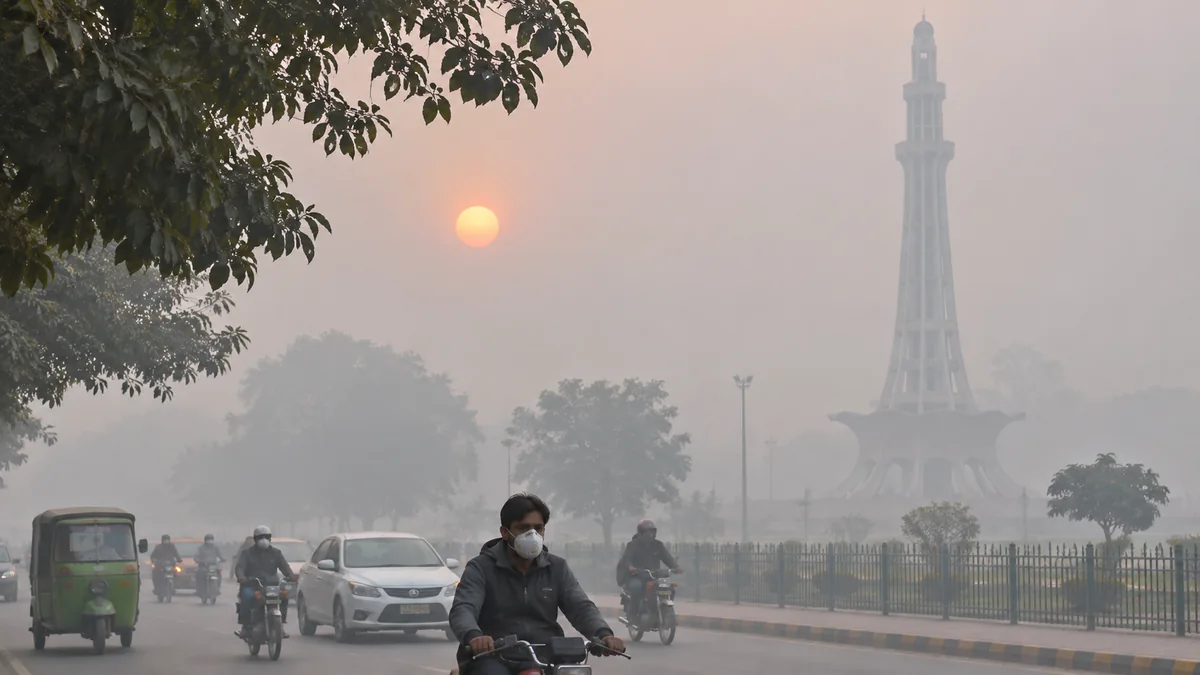
LAHORE: Lahore experienced severe air pollution on Monday, 9 November, with thick smog reducing visibility and air quality readings reaching hazardous levels across parts of the city.
According to air quality monitoring platform IQAir, Lahore recorded an Air Quality Index (AQI) of 590 during the morning, placing it among the world’s most polluted major cities at the time. An hourly reading reached 647.
Poor air quality was also reported in other parts of Punjab, including Raiwind, Multan and Faisalabad.
Weather Conditions Add to Pollution
Punjab’s Environment Protection and Climate Change Department had warned that pollution could worsen due to stagnant atmospheric conditions, easterly winds and smoke from agricultural burning.
The department also identified fireworks during Diwali celebrations in neighbouring Indian Punjab as a possible contributor to pollution moving towards Lahore and Kasur.
However, the precise share of pollution originating across the border remains uncertain. Vehicle exhaust, industrial emissions, road dust and crop burning within Pakistan also contribute to Punjab’s recurring winter smog.
Authorities Intensify Anti-Smog Measures
Provincial authorities reported inspections of factories and brick kilns, action against crop-residue burning and monitoring of areas with high pollution levels.
The environment department said Lahore’s average AQI declined from 489 at 9am to 232 by 3pm on Monday. Officials linked the improvement partly to enforcement and anti-smog measures, although changing weather conditions can also influence readings.
Despite the decline, air quality remained unhealthy.
Health Risks Remain
High concentrations of fine particulate matter, known as PM2.5, can aggravate asthma and other respiratory conditions and increase health risks for people with heart or lung disease.
Residents, particularly children, older people and those with existing health conditions, are advised to limit outdoor activity when pollution levels are high. Properly fitted N95 masks can help reduce exposure for people who need to go outside.
Punjab authorities had forecast elevated pollution through 10 November, with some improvement possible later in the week depending on weather conditions.