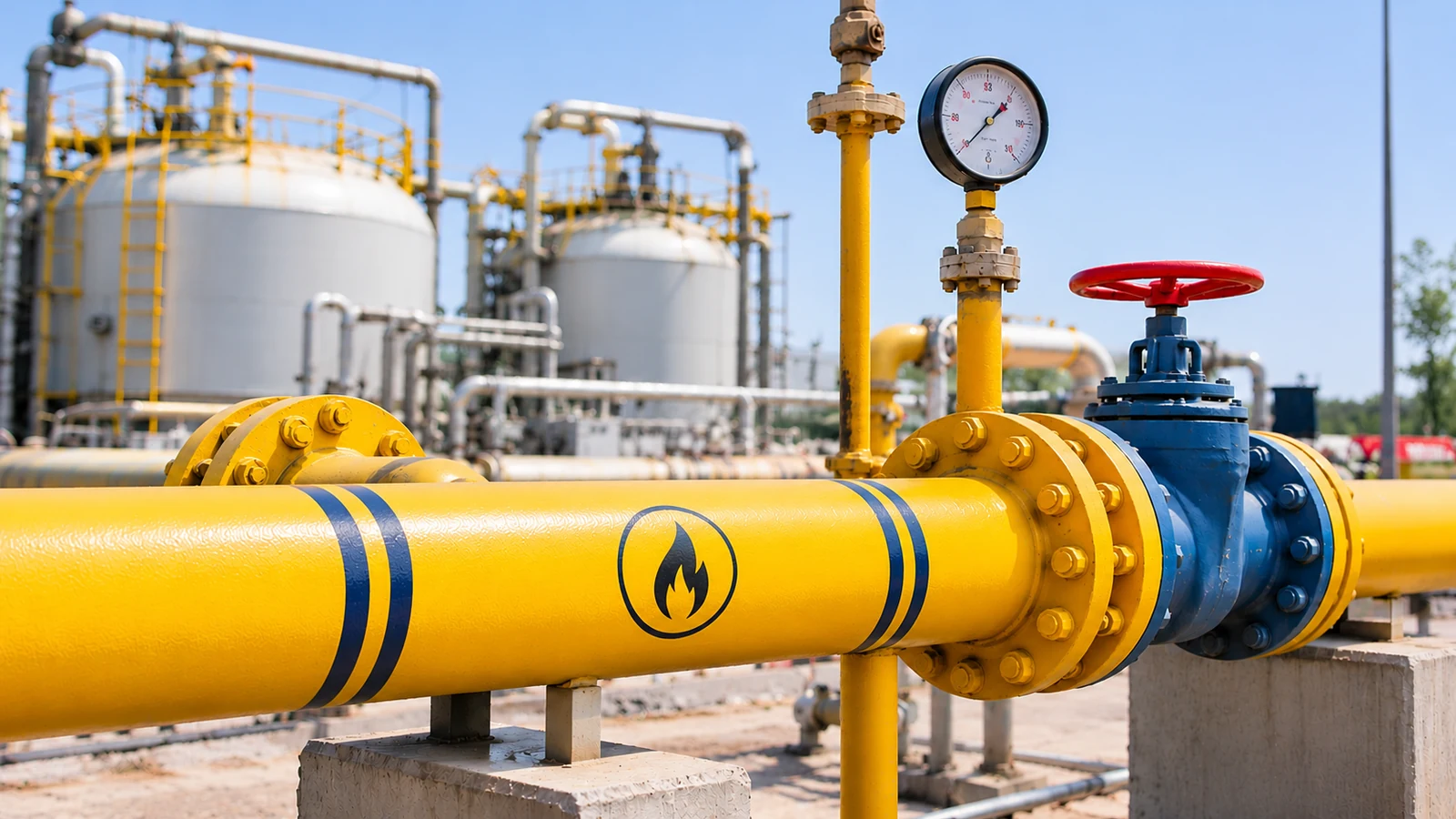
ISLAMABAD: The federal government has submitted a gas sector restructuring proposal to Prime Minister Shehbaz Sharif that envisages dividing Pakistan’s two major gas utilities into six to eight separate companies.
The framework would restructure Sui Northern Gas Pipelines Limited (SNGPL) and Sui Southern Gas Company (SSGC), separating gas transportation, distribution and sales to encourage competition and private-sector participation.
According to Petroleum Division officials cited by Dawn, the restructuring plan was developed with technical assistance from the World Bank, KPMG and Wood Mackenzie.
The proposed structure includes separate gas suppliers for industrial and commercial customers, while residential consumers would continue to receive gas through regulated companies.
The government also proposes transferring more than Rs3 trillion in accumulated gas sector circular debt to a separate debt management entity, with repayments financed through a surcharge on consumer bills.
Residential gas tariffs currently remain below supply costs. Financial modelling based on FY2025 accounts indicates that the proposed standalone residential gas supply companies could incur combined annual losses of Rs217 billion without tariff adjustments or subsidies.
The framework proposes gradually increasing residential gas tariffs and replacing the existing 12 tariff slabs with a uniform rate, alongside targeted subsidies for eligible domestic consumers.
The proposed tariff reforms aim to reduce cross-subsidies, under which industrial and commercial consumers currently pay higher gas prices to help offset the cost of subsidised residential supply.
Estimated capital investment requirements over six years stand at Rs736 billion for SNGPL and Rs390 billion for SSGC, covering infrastructure improvements and measures to reduce system losses.
The Petroleum Division is seeking the prime minister’s initial approval and direction on the constitutional, regulatory and legal processes required for the restructuring.
Officials are targeting the fourth quarter of 2027 to begin implementing the reforms.