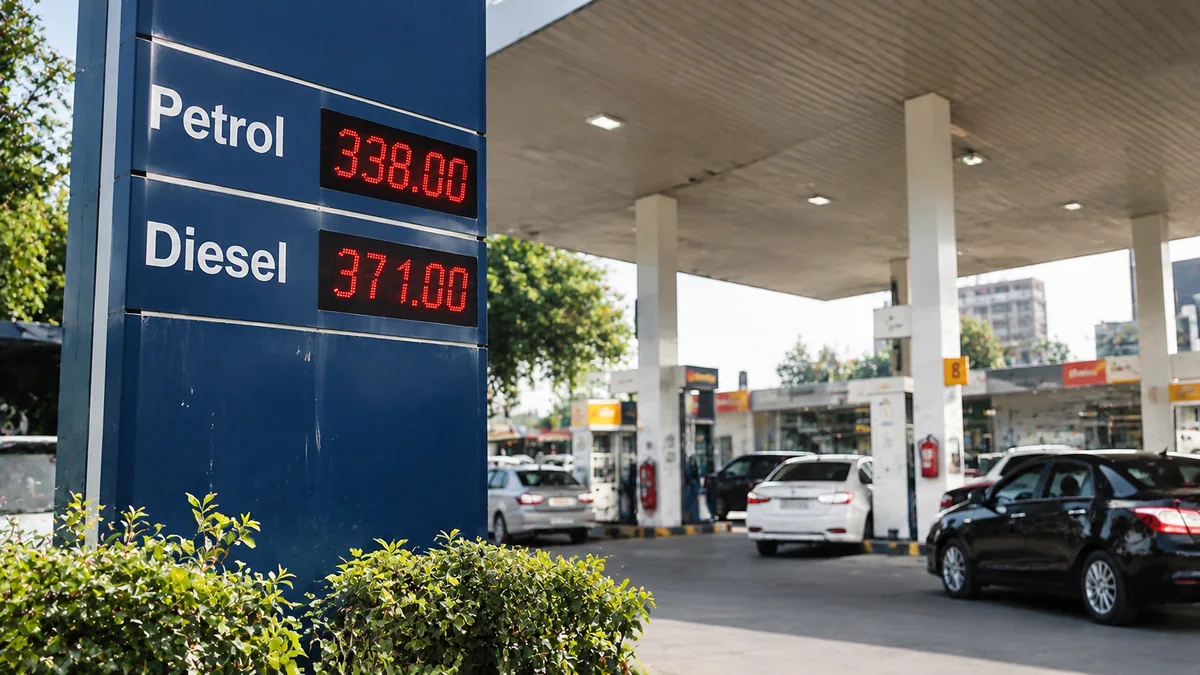
ISLAMABAD: Petrol and high-speed diesel prices have been reduced by Rs8 and Rs7 per litre respectively, providing another round of relief to motorists and transport operators across Pakistan.
The revised rates took effect on Wednesday, November 11, following a notification issued by the Oil and Gas Regulatory Authority (OGRA).
Petrol now costs Rs338 per litre, down from Rs346, while high-speed diesel has fallen from Rs378 to Rs371 per litre.
The latest adjustment follows a series of price revisions introduced as Pakistan responds to fluctuations in international petroleum markets.
According to pricing details reported by Business Recorder, the international benchmark for petrol declined from $101.92 to $97.12 per barrel, while the diesel benchmark fell from $104.34 to $100.57 per barrel.
The ex-refinery price of petrol also decreased from Rs249.92 to Rs241.56 per litre. For diesel, the corresponding figure declined from Rs269.86 to Rs263.28.
Government levies and fixed profit margins on the two fuels remain unchanged under the latest revision.
Consumers continue to pay approximately Rs114 per litre in taxes and duties on petrol and Rs100 on diesel.
The reductions come under a pricing arrangement in which OGRA reviews petroleum rates frequently to reflect changes in international market conditions.
Pakistan previously relied on fortnightly fuel price adjustments before moving towards more frequent revisions amid volatility in global oil markets.
The government has also introduced a temporary arrangement requiring oil refineries to contribute towards the petroleum levy.
Announced on November 2, the arrangement is expected to involve a cumulative contribution of Rs15 billion over 30 days, allowing part of the financial benefit to be passed on to consumers.
Petrol prices had reached Rs458.41 per litre in early April, while high-speed diesel peaked at Rs520.35 during the same period, following sharp increases linked to the Middle East conflict.
Although both fuels have become considerably cheaper since those peaks, their prices remain above levels recorded before the escalation in regional hostilities.
Petrol is widely used by motorcycles, rickshaws and private vehicles, while diesel is an important fuel for freight transport, buses, agricultural machinery and industrial operations.
Lower diesel prices can reduce operating costs for businesses that rely on road transport, although any reduction in freight charges or consumer prices will depend on decisions by transport operators and suppliers.