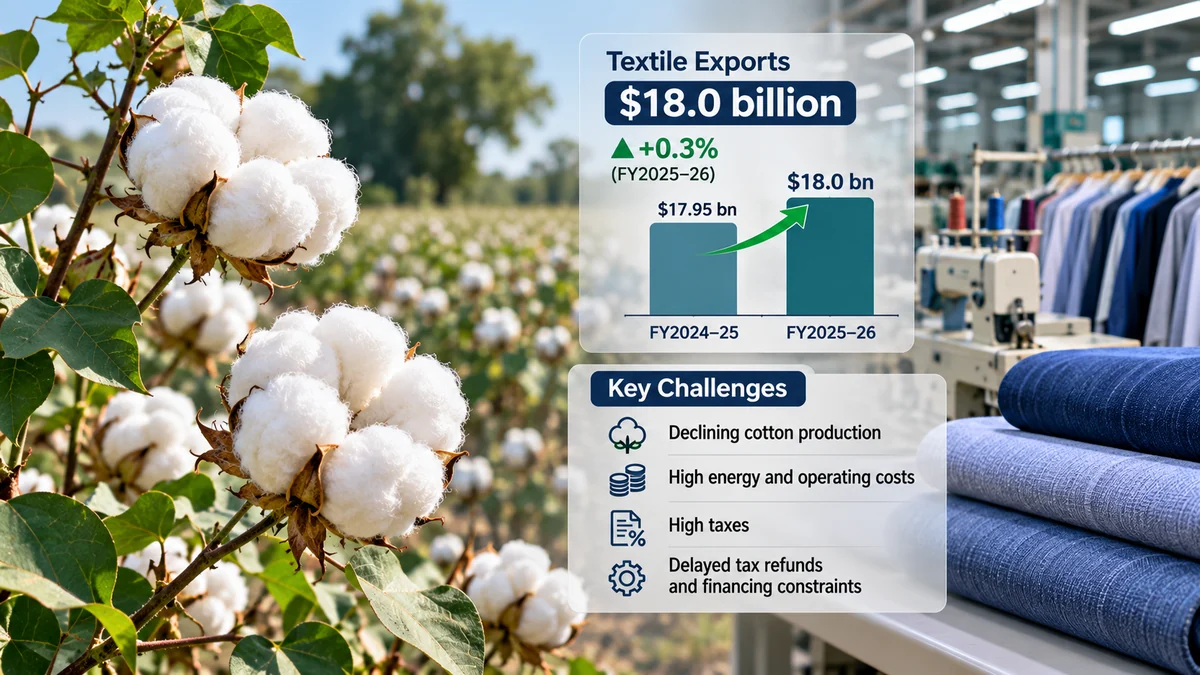
ISLAMABAD: Pakistan’s textile and apparel exports edged up by 0.3% to $18 billion in the 2025–26 financial year, with modest gains in finished products helping the sector maintain export earnings despite persistent difficulties in its domestic supply chain.
According to the Pakistan Textile Council’s Annual Export Performance Report, textile exports increased from $17.95 billion a year earlier, reaching their highest level in four years. The limited growth contrasted with a 5.9% decline in Pakistan’s overall merchandise exports, which fell to $30.14 billion.
The sector’s performance was uneven. Exports of value-added apparel and home textile products increased 1.1% to $14.98 billion, accounting for more than 83% of textile export earnings.
Woven apparel recorded the strongest growth, rising 3.9% to $4.295 billion. However, knitwear exports declined 0.7%, while exports of raw materials and intermediate textile products fell 3.4% to $3.03 billion.
The council linked weakness in the industry’s raw-material supply chain to declining domestic cotton production. Pakistan produced 5.5 million bales last season, its lowest output in three decades, compared with 14.8 million bales in 2011–12.
The shortfall has increased manufacturers’ reliance on imported cotton, adding to production costs and supply-chain pressures.
The report also identified high corporate taxes, expensive energy, delayed tax refunds and financing constraints as obstacles to stronger export growth.
Performance across international markets was mixed. The European Union remained Pakistan’s largest textile export destination, although shipments declined from $7.248 billion to $7.103 billion. Exports to the United States increased to $4.853 billion.
To improve competitiveness, the council recommended reducing corporate income tax from 29% to 15%, providing competitive energy tariffs, accelerating tax refunds and expanding access to export financing.
It also called for a national strategy to revive cotton production through improvements in seed quality, agricultural practices and supply-chain traceability.