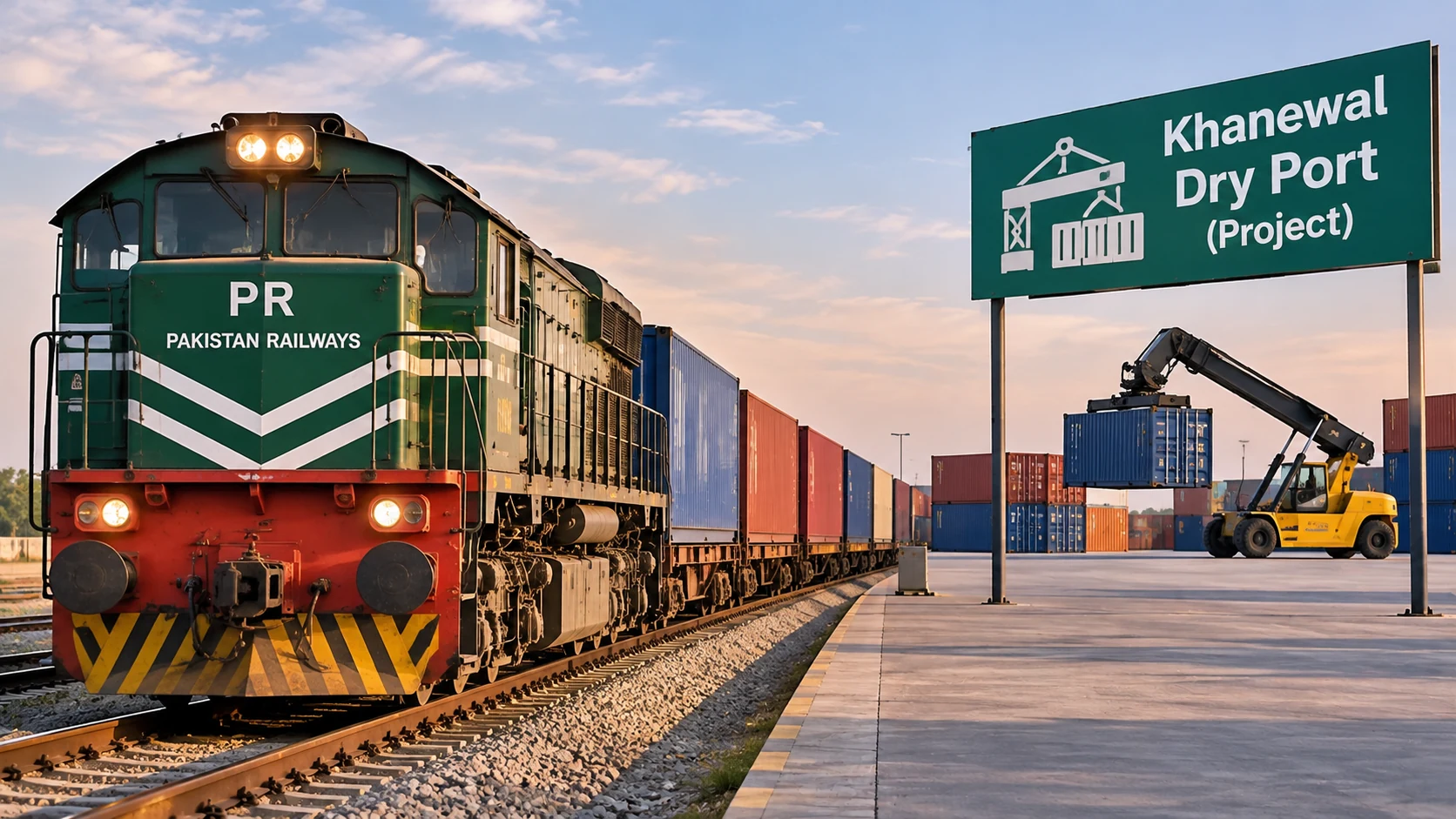
LAHORE, November 7, 2026 — Pakistan Railways has set a target of operating 14 freight trains by January and approved the establishment of a dry port at Khanewal as part of efforts to expand cargo services and increase revenue.
The decisions were announced following a high-level meeting chaired by Federal Minister for Railways Muhammad Hanif Abbasi at Pakistan Railways Headquarters in Lahore on November 6.
According to the Ministry of Railways, the expansion of freight services was discussed in response to demand from the business community.
Freight Expansion and Khanewal Dry Port
The railway administration aims to increase freight capacity and attract additional cargo business by expanding train operations.
The minister also approved the establishment of a dry port at Khanewal to improve cargo handling and strengthen freight operations.
A dry port provides inland facilities for handling and transferring cargo, potentially allowing businesses to connect more efficiently with railway freight services and seaports.
The ministry has not specified a construction timetable, project cost or opening date for the proposed Khanewal facility.
Measures to Address Overloading and Mechanical Safety
The meeting directed the installation of five additional weighbridges across the country by December 31 to help prevent overloaded freight movements and improve compliance with weight limits.
The minister also expressed concern about railway accidents linked to mechanical faults and decided that cases involving negligence by train examiners should be referred for inquiries through the Federal Investigation Agency.
These directions form part of a wider effort to strengthen operational oversight and accountability.
Operational Changes and Railway Infrastructure
Pakistan Railways decided to shift operational meetings from its headquarters to the divisional level, with the aim of improving monitoring and allowing quicker decisions on local operational matters.
The meeting also decided to phase out DVM and DVS coaches from the railway system.
To increase the supply of sleepers—the supports placed beneath railway tracks to hold the rails in position—the minister directed factories producing them to operate two shifts a day.
Officials were additionally instructed to address delays in the procurement of spare parts for locomotives and passenger coaches.
Separately, Abbasi met Punjab Senior Minister Marriyum Aurangzeb to discuss the rehabilitation of branch railway lines in the province.
According to the ministry, the Punjab government assured the railway authorities that funds required for the restoration of these lines would be released.
The freight-train target, dry port project and infrastructure measures remain subject to implementation by the relevant authorities.