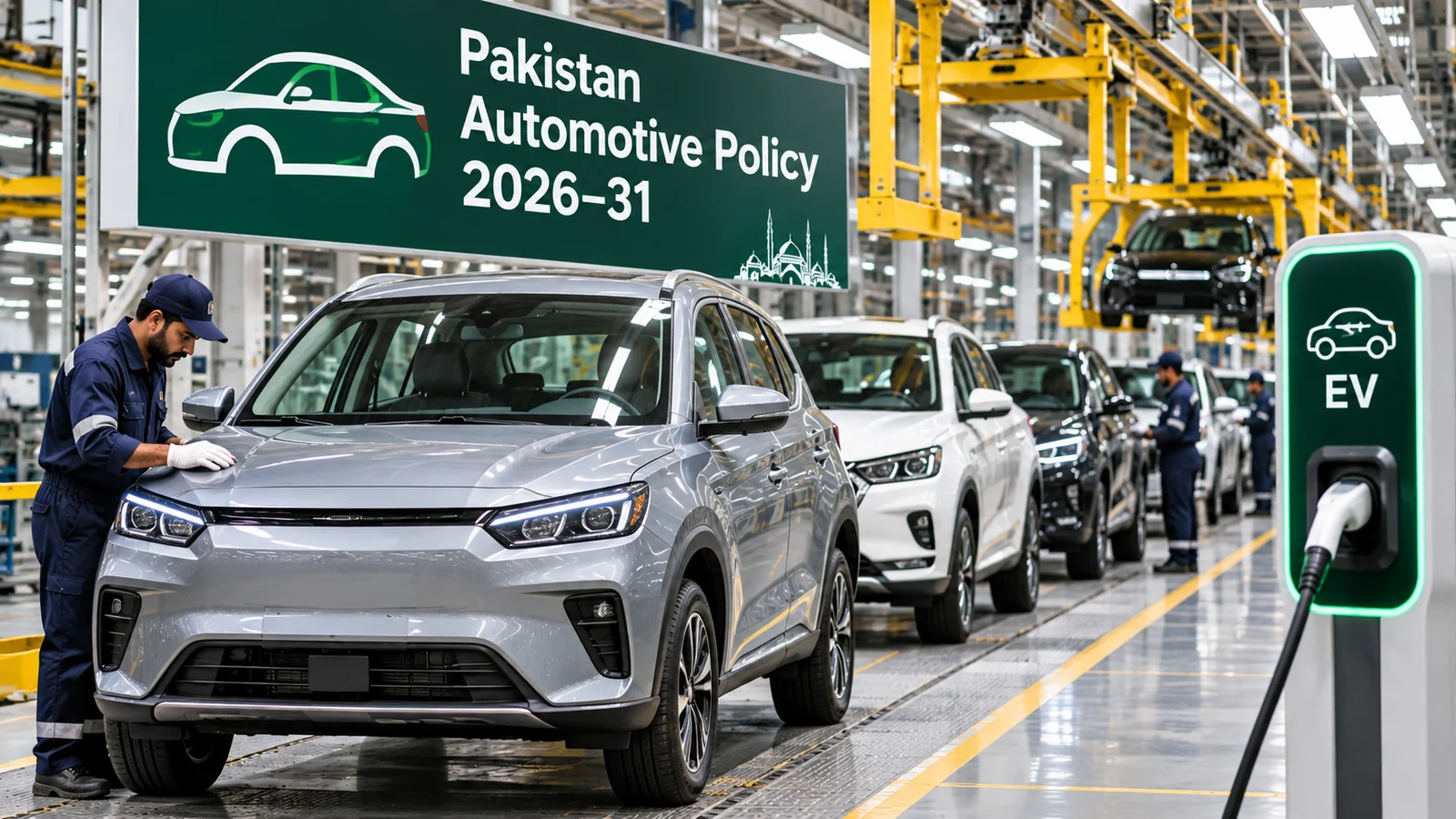
ISLAMABAD, November 8, 2026 — The federal government has unveiled a new automobile policy aimed at reducing vehicle prices, expanding electric vehicle adoption and increasing automotive exports to $6 billion over the next five years.
Adviser to the Prime Minister on Industries and Production Haroon Akhtar Khan outlined the proposed Automotive Industry Policy 2026–31 at a news conference on November 7 alongside Information Minister Attaullah Tarar.
The policy focuses on six areas: affordable vehicles, exports, electric vehicles, local manufacturing, safety standards and transparency. The draft has received the prime minister’s approval and is to be submitted to the federal cabinet for consideration.
Lower Costs for Smaller Vehicles
The government plans to gradually reduce import duties on automotive components, raw materials and assembly kits to lower manufacturing costs.
Particular attention is being given to vehicles with engine capacities below 1,300cc, which are generally aimed at middle- and lower-income consumers.
The proposed framework also seeks to limit advance payments demanded by manufacturers to 20% of a vehicle’s price, addressing concerns over excessive booking deposits and additional charges.
Incentives for Exports and Local Manufacturing
The policy sets a cumulative export target of $6 billion over five years, compared with approximately $200 million in automotive exports during the previous financial year.
Manufacturers would be eligible for a 5% rebate under the drawback of local taxes and levies scheme, with an additional incentive linked to growth in annual exports.
Access to incentives would depend on meeting export and localisation targets. Companies that fail to fulfil these requirements could face penalties or lose benefits.
The government also intends to encourage greater production of automotive parts within Pakistan rather than relying primarily on imported assembly kits.
Electric Vehicles and Fuel Imports
Electric vehicle adoption is another major component of the proposed policy, with tax incentives intended to make EVs more affordable.
The government plans to finance incentives through an Automotive Development Levy on conventional vehicles, while exempting vehicles with engine capacities of 1,000cc or below.
Officials said wider EV adoption could help reduce Pakistan’s dependence on imported petroleum products and limit exposure to fluctuations in international oil prices.
The policy also proposes stronger vehicle safety requirements and measures to improve transparency in the automotive market.
Its implementation will depend on final cabinet approval and the notification of the relevant regulatory and tax measures.