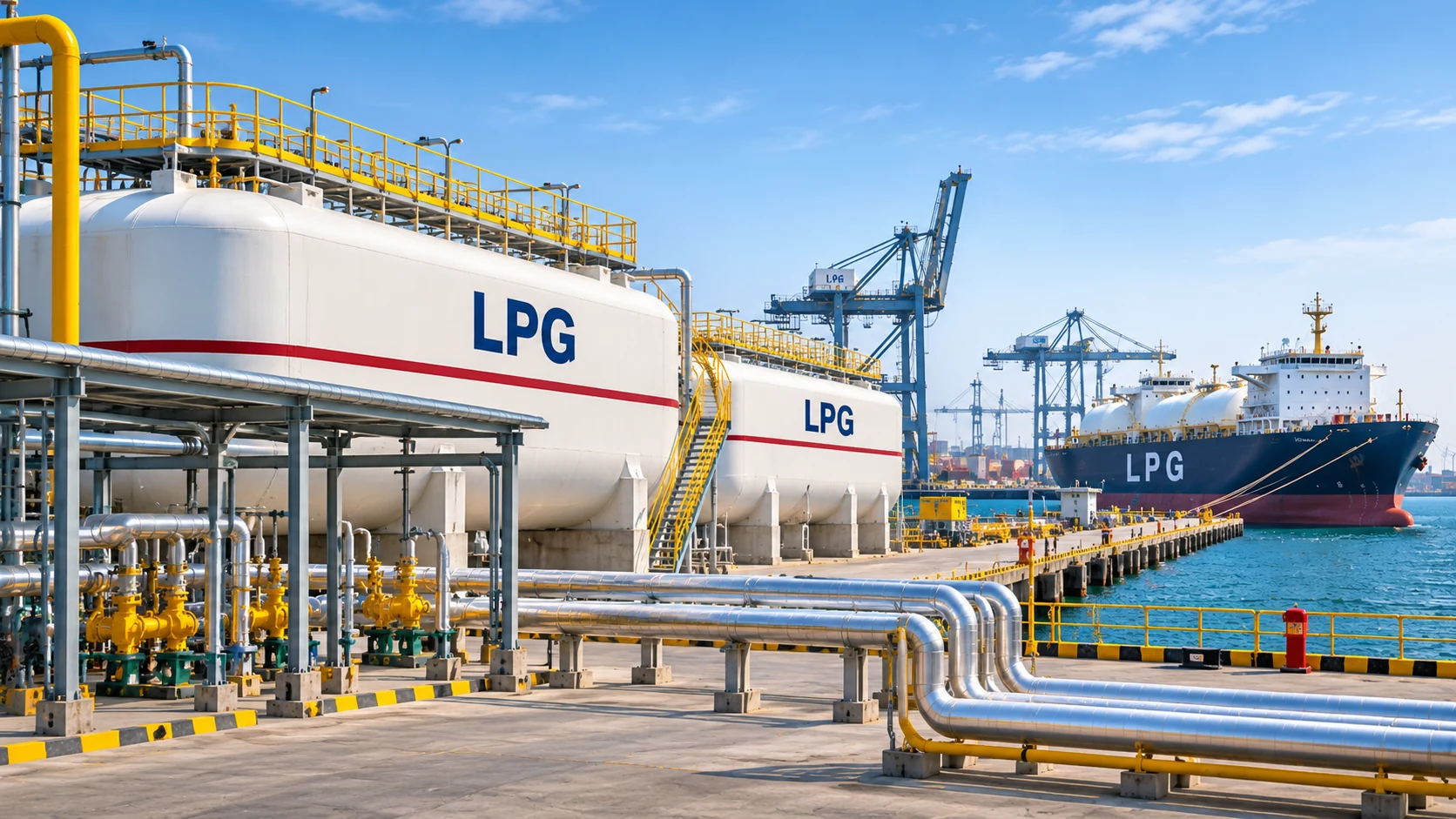
ISLAMABAD, November 7, 2026 — Pakistan is preparing an estimated $1 billion investment plan to expand liquefied petroleum gas (LPG) infrastructure over the next three to five years, as rising demand and increasing reliance on imports put pressure on the country’s storage and distribution network.
The proposed investment would cover additional import terminals, storage facilities, filling plants, cylinders and transportation infrastructure, according to information attributed to a senior Petroleum Division official in a report published on November 6.
The Pakistan Petroleum Exploration and Production Companies Association (PPEPCA) has also published a summary of the proposed expansion.
LPG Demand Projected to Reach 4.16 Million Tonnes
Pakistan’s annual LPG consumption is estimated at approximately 2.4 million metric tonnes.
According to demand projections cited in the report, consumption could reach 4.16 million metric tonnes by the financial year 2032–33.
Domestic LPG production is projected to increase from approximately 960,000 metric tonnes to 1.35 million metric tonnes over the same period.
Imports are consequently expected to play a greater role in meeting demand, potentially increasing from around 1.4 million metric tonnes to 2.8 million metric tonnes by 2033.
These figures are forecasts rather than confirmed future production or import volumes.
Expansion of Import Terminals and Storage Facilities
The proposed infrastructure programme would focus on strengthening Pakistan’s capacity to import, store, transport and distribute LPG.
Existing national LPG storage capacity is estimated at approximately 100,000 metric tonnes, including around 14,000 metric tonnes at seaports.
Seaborne LPG imports currently rely on two terminals at Port Qasim, making additional terminal and storage capacity an important consideration as projected imports increase.
The reported investment programme also covers cylinders, filling plants and transportation facilities needed to move LPG to consumers.
State-Owned Companies and Distribution Capacity
The industry association’s summary identifies Sui Northern Gas Pipelines Limited, SSGC LPG Limited and Pakistan State Oil (PSO) among the state-owned companies expected to have roles in expanding LPG logistics.
The proposed investment comes as LPG remains an important alternative fuel for households and businesses without reliable access to piped natural gas.
Additional infrastructure could increase the system’s capacity to handle imports and distribute supplies, although the eventual impact would depend on the projects completed and the availability of fuel.
Investment Plan Remains at Proposal Stage
The estimated $1 billion represents a reported infrastructure investment plan, not an amount confirmed as already allocated or spent.
Detailed project approvals, financing arrangements, construction schedules and individual investment commitments have not been independently established from an underlying Petroleum Division announcement.
The proposed expansion forms part of wider efforts to address Pakistan’s growing LPG requirements and strengthen the country’s fuel supply infrastructure.