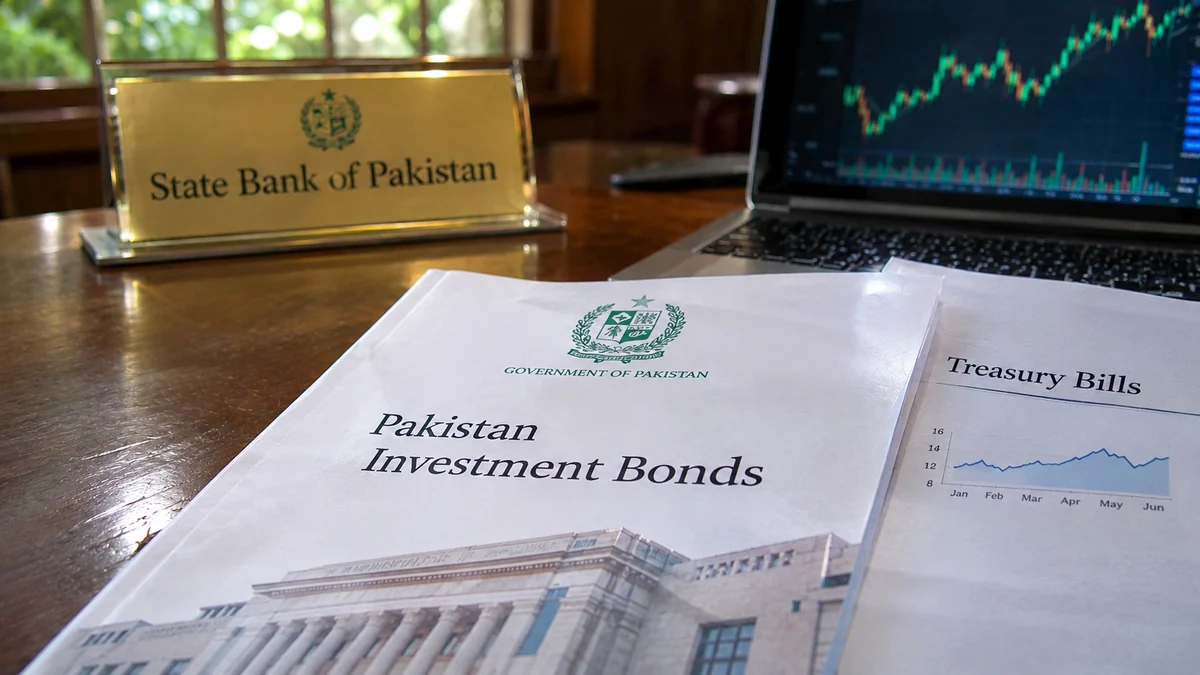
KARACHI: Foreign investors purchased $747 million worth of Pakistani government securities during the first four months of the current fiscal year, with higher returns attracting substantial investment into longer-term bonds.
Figures reported from the State Bank of Pakistan show that Pakistan Investment Bonds (PIBs) received $509 million in gross foreign inflows between July and October 2026.
Treasury bills attracted another $238 million over the same period, bringing combined purchases of the two government debt instruments to $747 million.
October accounted for approximately $251 million of the four-month investment in PIBs.
The United Arab Emirates was the largest source of PIB investment, contributing $396 million, equivalent to nearly 78% of the total.
Bahrain followed with $80 million in PIB purchases and also invested $72 million in treasury bills.
The United Kingdom was the biggest source of investment in treasury bills, accounting for $80 million.
Foreign purchases of Pakistani equities were comparatively smaller at $124 million during July–October. Combined gross inflows into government securities and shares reached approximately $872 million.
The investment comes as Pakistan offers relatively high returns on government debt.
The State Bank raised its benchmark policy rate by 50 basis points to 12% on October 26, while the six-month treasury bill yield subsequently stood at approximately 13%.
Higher yields can make Pakistani debt instruments attractive to overseas investors seeking returns above those available in other markets.
A relatively stable rupee has also supported interest in local-currency securities, although investors remain exposed to exchange-rate movements when converting their proceeds into foreign currencies.
Foreign participation in the government debt market provides an additional source of financing, but attractive returns on public borrowing also present challenges for the wider economy.
Financial-sector analysts have warned that banks and other domestic investors may favour government securities over lending to businesses, particularly when borrowing costs remain elevated.
That could make financing more difficult for smaller companies and the housing sector, both of which the government has been encouraging banks to support.
The scale of future foreign investment will depend partly on interest rates, exchange-rate conditions and investors’ willingness to continue holding Pakistani government debt.