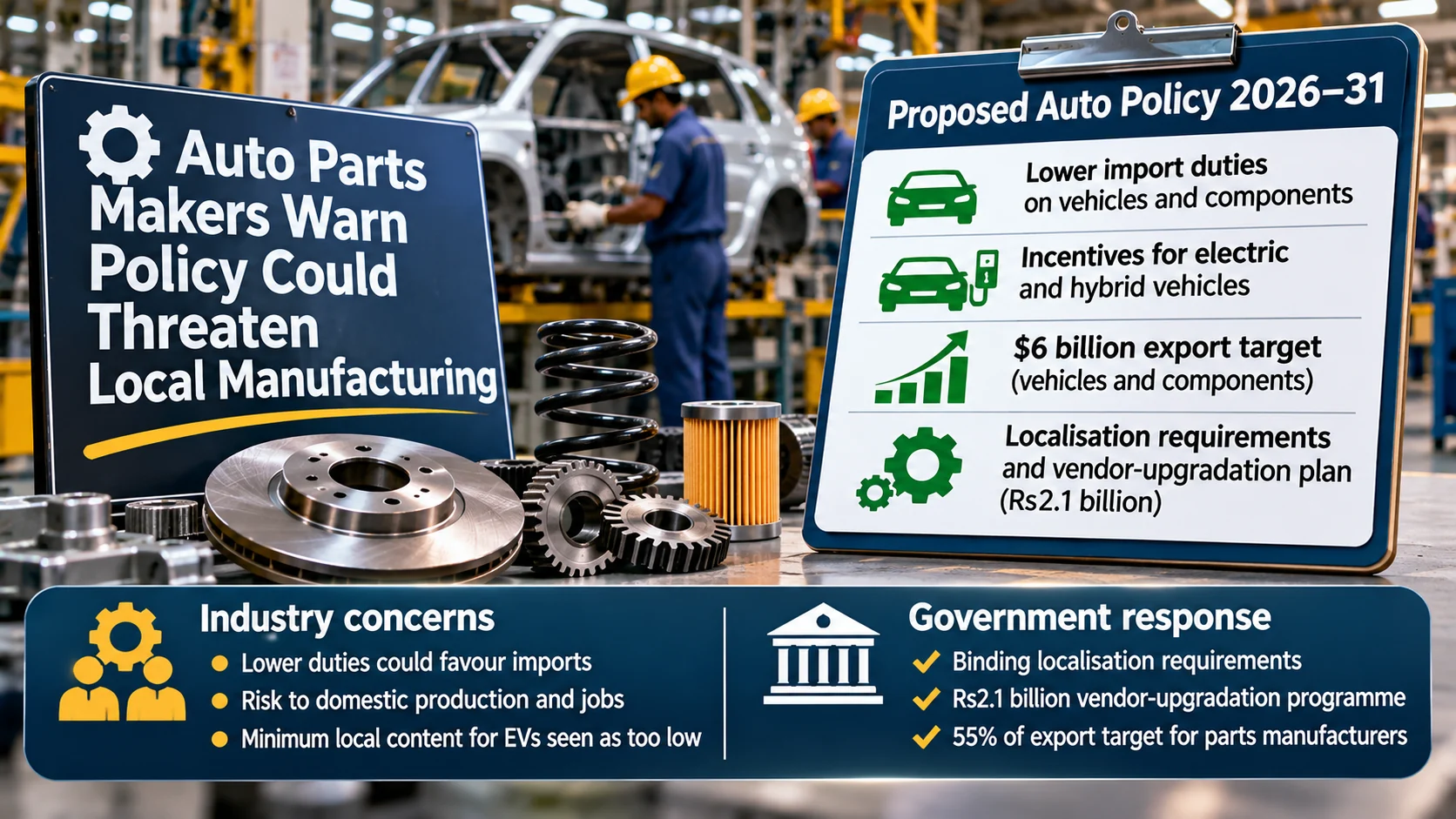
KARACHI: Pakistan’s automotive parts manufacturers have raised fresh concerns over the proposed Auto Policy 2026–31, warning that lower import duties on vehicles and components could weaken domestic production and put thousands of jobs at risk.
Representatives of the Pakistan Association of Automotive Parts and Accessories Manufacturers (PAAPAM) say the proposed tariff structure would make imported parts more attractive to vehicle assemblers, potentially reducing demand for locally manufactured components.
Former PAAPAM president Aamir Allawala said the policy favoured imports of fully built vehicles and assembly kits over domestic manufacturing.
According to the association, Pakistan’s automotive components industry comprises approximately 1,200 enterprises, directly employs around 300,000 people and supports another 1.5 million jobs indirectly.
PAAPAM Chairman Abdul Rehman Aizaz has objected to proposals to reduce customs duties on imported fully built vehicles to 15% by 2031.
The association also opposes proposed reductions in duties on imported components that are already manufactured in Pakistan, arguing that the changes could discourage assemblers from purchasing parts from domestic suppliers.
Parts manufacturers have expressed particular concern about incentives for new energy vehicles, including electric and hybrid models.
They argue that low minimum requirements for domestic value addition could allow companies to qualify for incentives while continuing to rely heavily on imported components.
The government, however, has presented the proposed policy as a plan to improve competitiveness, encourage electric vehicle adoption, strengthen localisation and expand automotive exports.
In a statement issued on Wednesday, Adviser to the Prime Minister on Industries and Production Haroon Akhtar Khan said the proposed policy would introduce binding localisation requirements and a Rs2.1 billion programme to help domestic parts manufacturers upgrade technology and improve export readiness.
The government has set an export target of approximately $3.29 billion for auto parts manufacturers over five years, representing 55% of the sector’s overall export goal. It also plans to link certain import concessions to domestic production commitments.
The draft sets a five-year export target of approximately $6 billion for vehicles and components, alongside measures intended to improve vehicle affordability and introduce stronger quality and safety standards.
Prime Minister Shehbaz Sharif has approved the final draft for submission to the federal cabinet, where it requires further consideration before formal adoption.
PAAPAM has urged the government to review the proposed tariff reductions and establish stronger localisation requirements to protect domestic investment and manufacturing capacity.
The disagreement highlights a central challenge for the proposed policy: increasing competition and reducing vehicle costs while maintaining incentives for local parts production.